
 Hospitals
 Companies
Say “Bapa Sitaram” anywhere in Gujarat and people know exactly who you mean. The phrase is a greeting, a blessing, and the name of the saint whose ashram at Bagdana has become one of the state’s most visited pilgrimage centres. The temple sits in Bagdana village, Mahuva taluka, Bhavnagar district, and runs on a simple promise that has held for decades: free food and free stay for anyone who comes.
People visit Bagdana for darshan at the samadhi of Bajrangdas Bapa, for the langar that never stops, and for the calm of an ashram built around service rather than spectacle. This guide covers the timings, the aarti, the life of Bapa Sitaram, how to reach, the distance from Bhavnagar, accommodation and bhojan, the Poonam gatherings, and the shrines inside the complex.
Quick Information
| Information | Details |
|---|---|
| Temple Name | Bapa Sitaram Mandir (Bagdana Dham) |
| Saint | Bajrangdas Bapa (Bapa Sitaram) |
| Location | Bagdana, Mahuva Taluka |
| District | Bhavnagar |
| State | Gujarat, India |
| Distance from Bhavnagar | ~80 km |
| Entry Fee | Free |
| Accommodation | Available, free |
| Bhojan (Food) | Free, served daily |
| Managed By | Shree Guru Ashram, Bagdana |
| Best Time to Visit | Throughout the year; Poonam and Guru Purnima are busiest |
What is Bagdana Dham?
Bagdana Dham is the ashram and temple complex built around Bajrangdas Bapa, the saint better known to millions simply as Bapa Sitaram. It is not an old monument or an architectural showpiece. It is a living ashram, run by the Shree Guru Ashram trust, where the main draw is the saint’s samadhi, the daily darshan, and the free kitchen.
What makes Bagdana stand out among Gujarat’s spiritual centres is its scale of seva. Food is served around the clock at no cost, rooms for night stays are free, and the whole place is organised around looking after pilgrims rather than charging them. That ethos, more than any building, is why families return year after year and why “Bapa Sitaram” carries the weight it does.
Who Was Bapa Sitaram?
Life of Bapa Sitaram
Bajrangdas Bapa was born in 1906 as Bhaktiram in the village of Adhewada, near Bhavnagar. From a young age he leaned toward devotion and the life of a sadhu, and he came to be known for his constant chant of “Sitaram,” which is how the name Bapa Sitaram took hold.
He settled at Bagdana and, in 1941, set up a small hermitage there called a madhuli. Over the next decade that humble shelter grew into a working ashram, taking shape by around 1951 as more devotees gathered around him. Bapa Sitaram gave the rest of his life to that place.
Teachings and Service
Bapa’s message was plain and practical: serve people, feed the hungry, and keep the name of god on your lips. He put little stock in ritual show and a great deal in seva. The free kitchen and open doors at Bagdana are a direct continuation of how he lived. He took samadhi in 1977, and the ashram has carried his work forward since, with the annakshetra and the free stay standing as his real legacy.
Legacy in Gujarat
Today “Jai Bapa Sitaram” is spoken across Gujarat as a blessing and a bond. Shops, vehicles, and homes carry his name, and his image is everywhere in Saurashtra. Bagdana is the centre of all of it, the place where the saint’s presence feels closest and where his idea of service is acted out every single day.
History of Bagdana Temple
The temple grew out of Bapa’s madhuli of 1941. As his following expanded through the 1940s, the simple hermitage was developed into a proper ashram by about 1951, with space for prayer, food, and the steady stream of visitors. After Bapa took samadhi in 1977, a samadhi shrine became the spiritual heart of the complex, and the trust kept building outward to meet the growing crowds.
The expansion has been driven by devotees rather than any grand plan, funded by donations and run on volunteer effort. Halls, kitchens, guest rooms, and several smaller shrines were added over the years. For the people who come, the significance is not the architecture but the continuity, the sense that the seva Bapa started has never stopped.
Bagdana Temple Timings
Darshan Timings
Bagdana keeps unusually long hours, and the ashram is open every day.
| Session | Approx. Timing |
| Daily opening | 4:00 AM to 11:00 PM |
Darshan runs through most of the day within that window. Timings can extend on Poonam, Guru Purnima, and the death anniversary of Bapa Sitaram, when crowds are heavy and the ashram adjusts to handle them. Confirm locally if you are coming for a specific ritual on a festival day.
Aarti Timings at Bagdana Dham
The ashram holds aarti at fixed points through the day.
| Aarti | Approx. Timing |
|---|---|
| Mangala Aarti (morning) | 5:00 AM |
| Rajbhog Aarti (midday) | 12:00 PM |
| Sandhya Aarti (evening) | 6:30 PM |
These are the regular timings and can change slightly on festival days. The morning Mangala Aarti and the evening Sandhya Aarti are the ones most devotees plan around.
Bagdana Temple Today – Is It Open?
The ashram is open every day of the year, within the 4:00 AM to 11:00 PM window. On Poonam days, Guru Purnima, and Bapa’s anniversary, expect much larger crowds, longer darshan queues, and special arrangements, and plan for extra travel and waiting time. On an ordinary day it is calm and easy to visit. If you are timing a trip around a festival, check the current dates first, since they follow the Hindu calendar and move each year.
Bagdana Dham Location
Where is Bagdana Located?
Bagdana is a village in Mahuva taluka, in the southern part of Bhavnagar district, Gujarat. It sits inland from the coast, about 32 km from Mahuva town, roughly 40 km from Palitana, and around 80 km from Bhavnagar city. Bhaguda, with its Mogal Dham temple, is only 13 km away.
How to Reach Bagdana Dham
By road is how nearly everyone arrives. From Bhavnagar it is about 80 km via Talaja and the Mahuva road, and the ashram runs deep in Mahuva taluka, so the last stretch is a village drive. By train, reach Mahuva or Bhavnagar and continue by road. By air, the nearest airport is Bhavnagar, with Ahmedabad as the larger option, and you drive from either. There is no airport or major station at the village itself, so the final leg is always a local hop by car, taxi, or bus.
Bhavnagar to Bagdana Distance
Distance from Bhavnagar
Bagdana is roughly 80 km from Bhavnagar by road, usually two to two and a half hours depending on traffic and the exact route. The common way runs through Talaja and toward Mahuva before turning off to Bagdana. The roads are reasonable, and the drive is straightforward in daylight. A car or taxi is the easiest option, especially if you also want to fold in Bhaguda or the coast.
Bhavnagar to Bagdana Bus Timetable
GSRTC runs buses from Bhavnagar toward Mahuva and Bagdana, and Bagdana is a known stop on the pilgrimage circuit, so direct and connecting services do operate. Frequency and exact departure times change with the season and rise sharply around Poonam and festival days. Rather than trust a fixed schedule that may be out of date, check the latest GSRTC timings at the Bhavnagar bus stand, on the official GSRTC booking site, or by phone before you set out. The GSRTC enquiry numbers and the Bhavnagar bus station guide will point you to current information.
Nearest Railway Station to Bagdana Temple
Mahuva is the nearest railway station to Bagdana, roughly 32 km away, with regional connections. Bhavnagar Terminus, about 80 km away, is the bigger station, linking to Ahmedabad, Surat, Mumbai, and beyond, and is the better choice if you are travelling a long distance. From either, you finish the trip to Bagdana by road. The Bhavnagar railway station guide has the train and facility details.
Bagdana Temple Accommodation
Staying at Bagdana is simple and free. The ashram runs dharamshala-style accommodation for pilgrims, with guest rooms and halls provided at no cost, in keeping with Bapa’s principle of seva. The rooms are basic and meant for rest rather than comfort, and they suit families, groups, and anyone wanting an overnight stay for darshan or a Poonam visit.
On ordinary days rooms are usually easy to get. Around Poonam, Guru Purnima, and the anniversary, demand spikes and the ashram fills quickly, so arrive early or plan to use accommodation in Mahuva town nearby. For better-equipped hotels, Bhavnagar city is the fallback; see the most popular hotels in Bhavnagar. For room availability at the ashram itself, the Shree Guru Ashram trust is the right point of contact.
Bhojan & Prasad at Bagdana
The free kitchen is the soul of Bagdana. Food is served around the clock, every day, at no charge, to whoever walks in. This annakshetra is the living form of Bapa’s teaching, and it runs entirely on donations and volunteer hands.
Pilgrims eat together in the dining halls, the meals are simple vegetarian fare, and no one is turned away. Alongside the regular bhojan, prasad is distributed as part of darshan. For many visitors, sharing a meal in the ashram kitchen is as much a part of the trip as the darshan itself.
Important Places Inside Bagdana Dham
The complex holds several shrines beyond the main temple, and devotees usually move through them together.
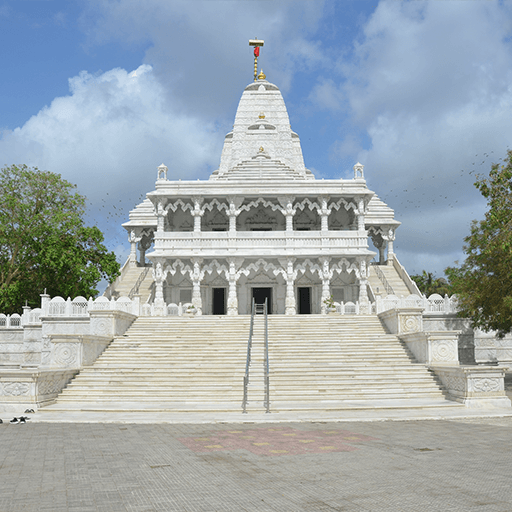
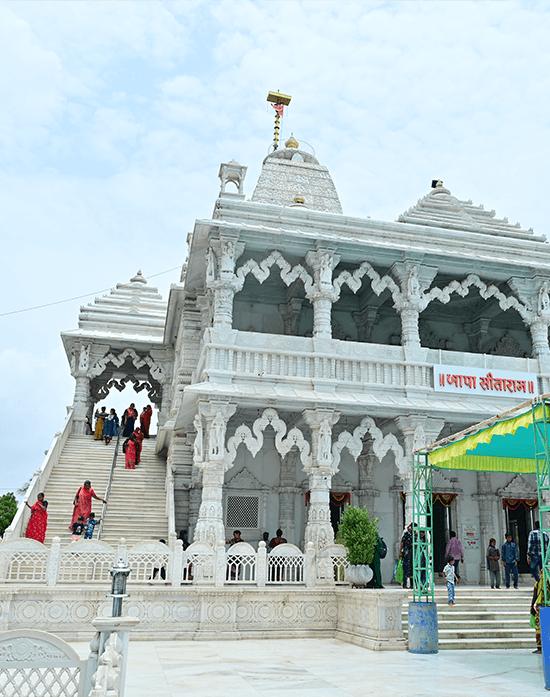
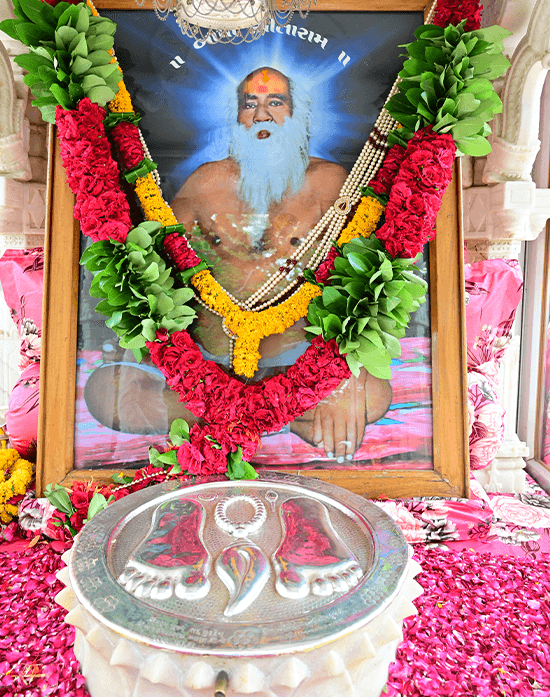
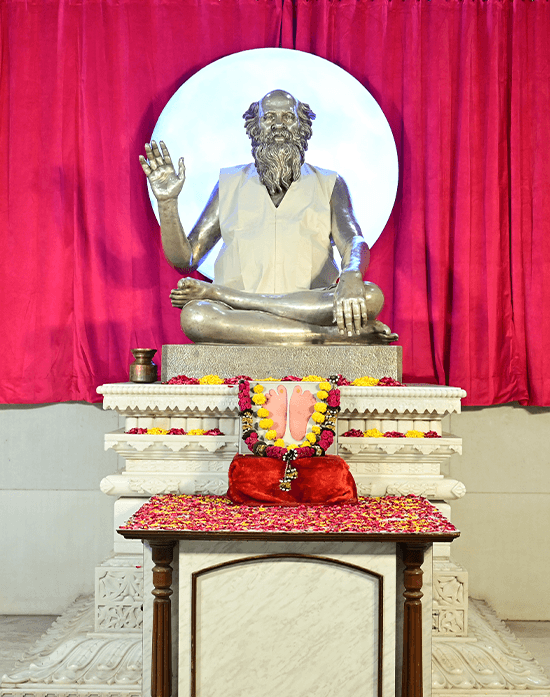
The Bapa Sitaram Samadhi is the spiritual centre, the resting place of Bajrangdas Bapa and the focus of most darshan. The main temple anchors the daily worship. Around them sit smaller shrines that pilgrims visit in turn, including a Hanuman temple (fitting for a saint named Bajrangdas), a Ram Darbar shrine, a Ganesh shrine, a Kaal Bhairav shrine, and a Dhyan Mandir for meditation, along with the Annapurna kitchen-shrine tied to the free bhojan. Arrangements and shrine layouts get expanded over time, so you may find more on the ground; ask at the ashram if you want to cover them all.
Poonam at Bagdana Dham
Why Poonam is Special
Poonam, the full-moon day, is the big monthly draw at Bagdana. Each Poonam pulls large crowds of devotees who time their visit to the lunar calendar, and the ashram takes on a festival energy that an ordinary day does not have.
On these days the darshan queues lengthen, the kitchen works at full stretch, and bhajan and devotional gatherings fill the complex. Many families make a fixed habit of the Poonam visit, traveling in groups and staying overnight. Guru Purnima and Bapa’s anniversary are the largest gatherings of all. If you want the full devotional atmosphere, come on a Poonam, but plan for crowds, slower travel, and a wait for rooms. For a quiet darshan, pick a regular weekday instead.
Photos of Bagdana Temple
Nearby Places to Visit
Bagdana works well as part of a wider Bhavnagar pilgrimage circuit.
Bhaguda Mogal Dham
Only 13 km away, the Mogal Maa temple at Bhaguda is a major Saurashtra shrine and the natural pairing with Bagdana. See the Bhaguda Mogal Dham guide.
Khodiyar Mata Temple, Rajpara
The Khodiyar Mata Temple at Rajpara is another important shrine on the way back toward Bhavnagar. Details in the Rajpara Khodiyar Mandir guide.
Mahuva Beach
Mahuva, about 32 km from Bagdana, has a calm coastline and the lush surroundings that earned it the name Kashmir of Saurashtra. A pleasant break between temple stops.
Nishkalank Mahadev
Up the coast at Koliyak, the Shiva temple in the sea is reachable only at low tide. Worth adding if your route passes through Bhavnagar; check the Nishkalank Mahadev tide timings.
Other Spiritual Destinations
The Bhavnagar region is dense with pilgrimage sites, from the Jain temples of Palitana (about 40 km away) to the city shrines. The best tourist places in Bhavnagar guide helps you build a route.
Best Time to Visit Bagdana
Winter, October to February, is the most comfortable stretch for the drive and the stay, with cool, pleasant weather. The monsoon turns the Mahuva countryside green but brings rain and slower roads, so plan around the weather. Festival days, especially Guru Purnima and Bapa’s anniversary, offer the fullest devotional experience but the heaviest crowds. Poonam days sit in between, busy but manageable. For a calm visit, a winter weekday away from Poonam is ideal.
Facilities Available
The ashram is set up to look after large numbers of pilgrims. There is parking near the complex, free drinking water, and the free bhojanshala that runs all day. Accommodation in the dharamshala is free, rest areas are available for tired travellers, and volunteers keep the place orderly even when it is full. Basic accessibility and rest provisions are in place, though the older parts of the complex are simple, so anyone needing wheelchair access should ask staff for the easiest routes on arrival.
Frequently Asked Questions
What is the timing of Bagdana Mandir?
The ashram is open daily, roughly 4:00 AM to 11:00 PM, with darshan through most of that window and longer hours on festival days.
Who was Bapa Sitaram?
Bajrangdas Bapa, born in 1906 as Bhaktiram in Adhewada near Bhavnagar. A saint known for his “Sitaram” chant and his life of service, he founded the Bagdana ashram and took samadhi in 1977.
Is accommodation available?
Yes, and it is free. The ashram provides dharamshala rooms and halls for pilgrims.
Is free food available?
Yes. The annakshetra serves free vegetarian meals around the clock, every day.
What is the distance from Bhavnagar?
About 80 km by road, around two to two and a half hours.
Which district is Bagdana in?
Bhavnagar district, in Mahuva taluka, Gujarat.
What is the nearest railway station?
Mahuva, about 32 km away. Bhavnagar Terminus, about 80 km away, has wider connections.
Is room booking available?
Rooms are provided free by the ashram. For availability, especially around Poonam and festivals, contact the Shree Guru Ashram trust in advance.
What is special about Bagdana Dham?
It runs entirely on seva, with free food served all day and free stays for pilgrims, centred on the samadhi of Bapa Sitaram.
When is the monthly Poonam gathering?
On each full-moon day. Dates follow the Hindu lunar calendar, so check the current month’s Poonam date before planning.
Is there parking available?
Yes, near the ashram, with extra arrangements on festival days.
Can families stay overnight?
Yes. The free dharamshala accommodation suits families and groups, with hotels in Mahuva and Bhavnagar as alternatives.
What are the aarti timings?
Mangala Aarti around 5:00 AM, Rajbhog Aarti at 12:00 PM, and Sandhya Aarti at 6:30 PM, with slight changes on festival days.
Is Bagdana open today?
The ashram is open every day of the year within its daily hours. Festival days are open but very crowded.
How far is Bagdana from Bhaguda Mogal Dham?
About 13 km, which is why the two are usually visited together.
Is there an entry fee?
No. Entry, food, and stay are all free.
Conclusion
Bagdana is loved less for what it looks like and more for how it treats the people who arrive. A saint who chanted Sitaram and fed whoever was hungry, an ashram that has kept that going for decades, free meals at any hour, and free rooms for the night. It is an easy drive from Bhavnagar, sits 13 km from Bhaguda, and slots neatly into a Saurashtra pilgrimage that can take in Mahuva, Palitana, and the coast. Come on a quiet weekday for calm darshan or on a Poonam for the full gathering, and pair it with the Bhaguda Mogal Dham guide and the best tourist places in Bhavnagar to plan the wider route.
Dhiraj Patel is a seasoned writer for Bhavnagar.city, passionately exploring the city’s culture, history, and lifestyle. With a deep understanding of Bhavnagar’s heritage, he crafts engaging, well-researched content that resonates with locals and visitors alike. Dhiraj’s expertise and firsthand experiences ensure his articles are both informative and trustworthy.