
 Hospitals
 Companies
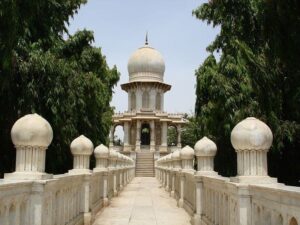 The name “Ganga Deri” is intimately connected to its surroundings. Bhavnagar is a coastal city that historically featured a bustling central lake known as Gangajaliya Talav. The name of the lake is derived from the holy river Ganga, combined with Jal (meaning water) and Talav (meaning lake or pond). Ganga Deri derives its name from its strategic placement in and around this revered water body.
Originally, the monument served as a breathtaking centerpiece, situated like an island within the Gangajaliya Talav. Over time, as urban development progressed and parts of the lake were reclaimed, the monument’s setting shifted, and today it stands gracefully on the lake’s banks, accessible via a small bridge and pavilion.
 To bring his vision to life, Maharaja Takhtsinhji enlisted the expertise of the renowned artist and architect Sir John Griffith. Griffith, who served as the principal of the prestigious Sir J.J. School of Art in Bombay, was highly celebrated for his extensive work documenting the Buddhist cave paintings at Ajanta (published in two monumental folio volumes).
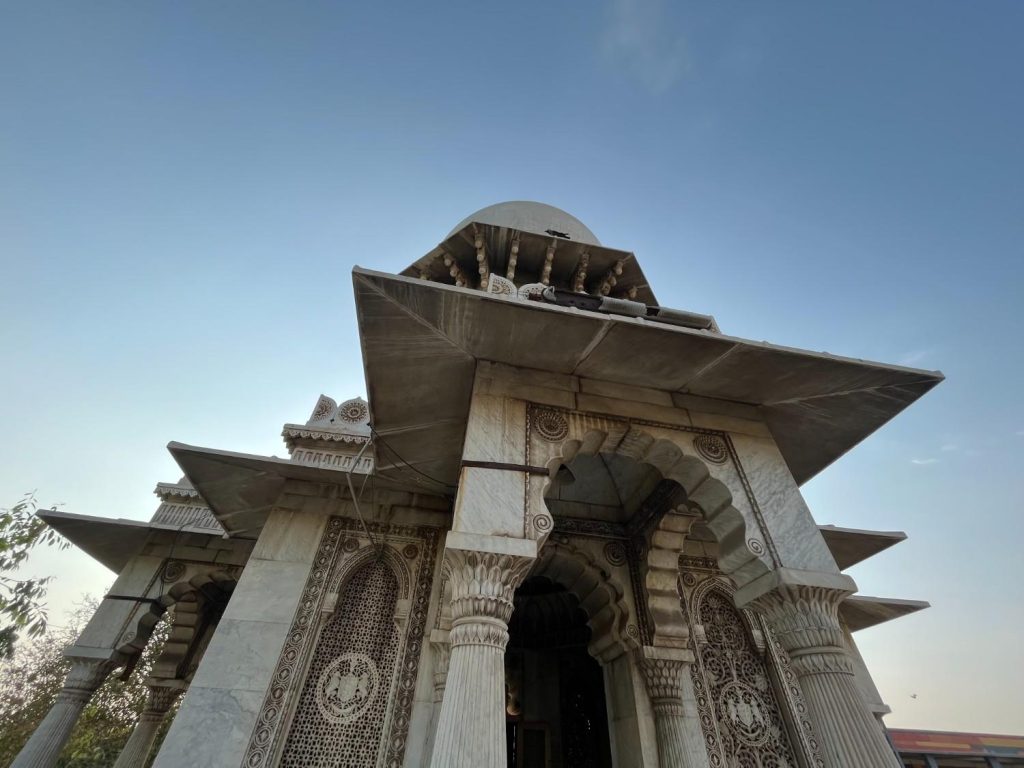
Under Griffith’s direction, Ganga Deri was crafted entirely from gleaming white marble. The architectural style chosen was Indo-Saracenic—a deliberate and beautiful amalgamation of Hindu and Islamic design elements that was popular during the colonial era. The structure’s design bears a striking resemblance to the famed Ibrahim Rauza’s tomb in Bijapur, Karnataka, known for its elegant proportions and symmetry.
The monument is a two-storied structure crowned with an ornate chhatri (canopy). The architects also paid close attention to the local climate; the roof was specially engineered to protect the foundational structure from the direct impact of harsh monsoon rains, ensuring the memorial’s longevity.
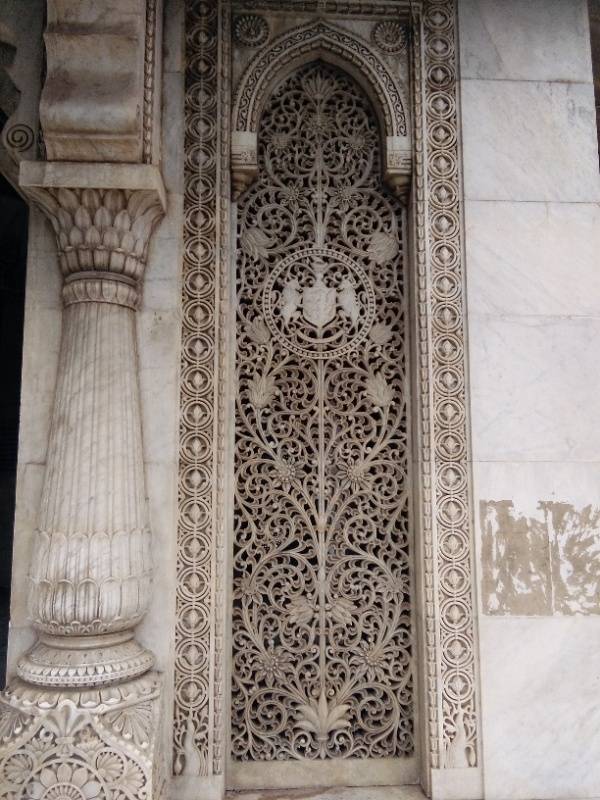 The true beauty of Ganga Deri lies in its meticulous detailing. The lower section of the monument features exquisite hexagonal lattice work (jalis). Each lattice panel is adorned with intricate floral motifs and is framed by graceful, flowery arches that allow light and breeze to pass through, creating a serene, ethereal atmosphere inside.
The exterior decoration of Ganga Deri is rich with the symbolism of the Bhavnagar State. It prominently features the state insignia displayed on a “label azure” (a blue background). Beneath the insignia rests a poignant and philosophical slogan: “Man Proposes, but God Disposes,” a fitting reflection on the unpredictable nature of life and death that led to the monument’s creation.
The state emblem carved into the monument includes three key symbols, each representing a core aspect of the princely state’s identity:
- The Ship: Highlighting Bhavnagar’s status as a thriving coastal city where maritime trade was the primary engine for economic prosperity.
- The Lion: A traditional symbol of triumph, courage, and royal authority.
- The Eagle: Representing keen, long-range vision and foresight.