
 Hospitals
 Companies
This year Tulsi Vivah is celebrated over two days. Friday, 20 November is Kartak Sud Agiyaras, Dev Uthi Agiyaras, and many homes and temples marry Tulsi on this day. Saturday, 21 November is Kartak Sud Baras, when most mitra mandals hold their grand celebrations with the varghodo and hastmelap.
Across the city, Tulsi is married to Lalji Maharaj, or Shaligram, with every ritual of a Gujarati wedding. The mandap goes up in the morning, the women of the area do the pujan in the afternoon, and the varghodo arrives with dhol and nagara in the evening, just before the hastmelap. Some of these celebrations have run for decades, and all of them welcome anyone who wants to join.
Tulsi Vivah Date and Hastmelap Timings
Friday, 20 November (Kartak Sud Agiyaras): Tulsi Vivah in many homes and temples, along with the mandap muhurat and early rituals at the big mandals.
Saturday, 21 November (Kartak Sud Baras): The main mandal celebrations. These are the hastmelap timings:
| Venue | Varghodo or Jaan | Hastmelap |
|---|---|---|
| Ramji Mandir, Vadva | Phuleku from Vadva Chavdi Gate | 7:30 pm |
| Diamond Chowk Mitra Mandal | From Sadguru Ashram, Bhagwati Circle | 8:30 pm |
| Tulsi Chowk, Kaliyabid | From Ayodhya Chowk, Madhuli | 8:31 pm |
| Sanskar Mandal area | From Maldhari Society Thakordwar | Around 10 pm |
On Saturday the processions start moving through the streets around 7 pm, so reach your spot by then. For Tulsi Vivah at home on Saturday, the godhuli muhurat is from 5:25 pm to 5:52 pm.
Kaliyabid: Tulsi Chowk, Lakhubhai Hall
Riddhi Siddhi Mitra Mandal Trust is hosting Tulsi Vivah at Tulsi Chowk for the 26th year. The celebration began on Thursday, 19 November with the chandla and sagai vidhi.
On Saturday the mandap muhurat is at 9 am, and the sisters’ pujan follows at 2:30 pm. The cultural program starts at 7 pm, the jaan arrives at 7:30 pm, and the hastmelap is at 8:31 pm sharp. The varghodo leaves from Ayodhya Chowk, Madhuli, with dhol and nagara and comes through Virani Chowk to Tulsi Chowk.
This year, couples who have no daughter of their own will do the kanyadan for Tulsi. It is one of the most moving moments of the evening.
Diamond Chowk Mitra Mandal
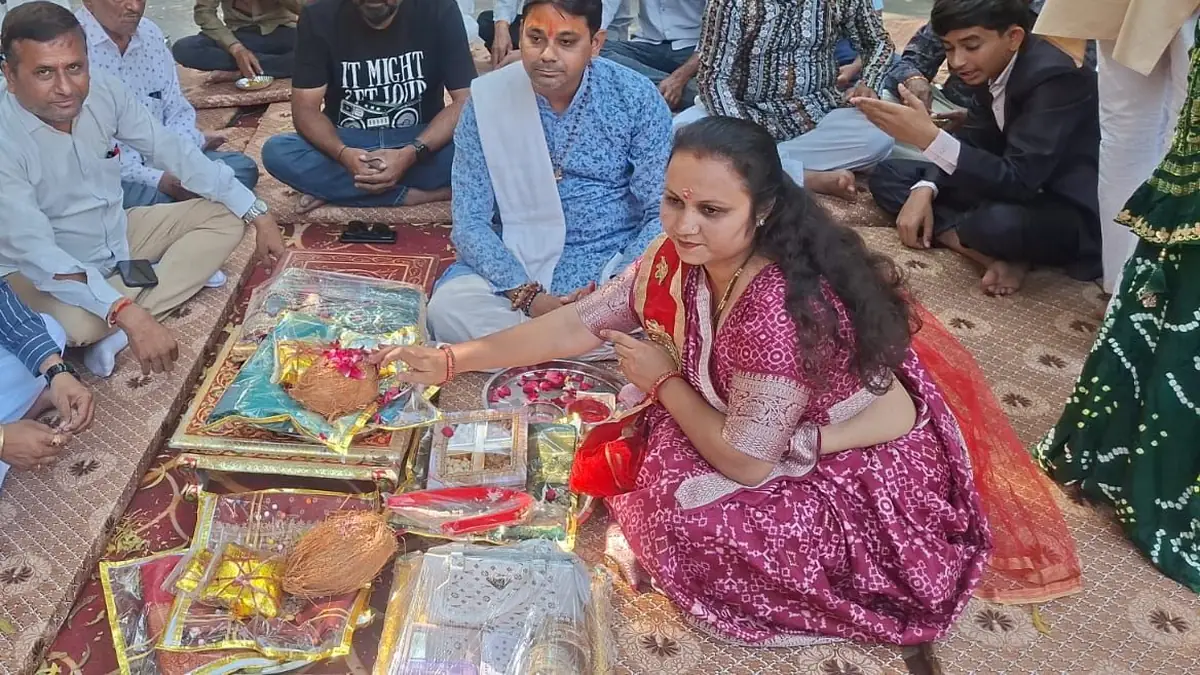
Diamond Chowk, near Mahila College Circle, has one of the oldest Tulsi Vivah celebrations in the city. The tradition is 70 years old and well known across Gujarat. The festivities began on Friday morning, 20 November, with the mandap muhurat and the chhab vidhi, when the wedding items for Tulsi were laid out and offered with puja.
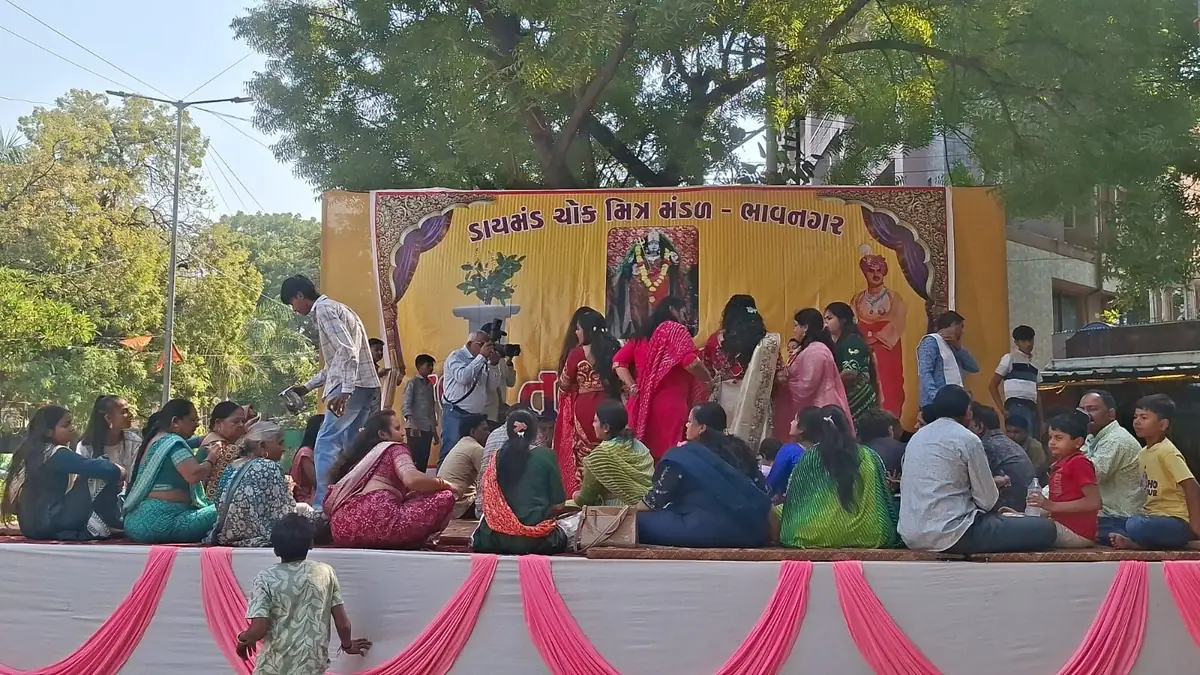
On Saturday, Lalji Maharaj’s varghodo starts from Sadguru Ashram at Bhagwati Circle, Kaliyabid, and makes its way to Diamond Chowk. The sisters’ pujan is at 3:30 pm and the hastmelap is at 8:30 pm, with the kanyadan done by Pratikbhai Joshi. Rajshriben Parmar sings the phatana, the wedding songs that playfully tease the groom’s side. The Brahmakumaris put up a jhanki, and the night ends with Radha-Krishna raas.
Vadva: Ramji Mandir, Kalo Delo
At Vadva, Shaligram and Tulsi are married in the courtyard of Ramji Mandir at 7:30 pm. Most people come for the phuleku, a large procession with a DJ. It goes from Vadva Chavdi Gate through Vijay Chowk, Ruvapari, Limdi Chowk and Panwadi Chowk, then comes back to the temple. The streets on this route fill up quickly, so come early for a good spot.
Other Tulsi Vivah Celebrations in the City
Several smaller mandals hold Tulsi Vivah every year. In Bharat Nagar, the varghodo starts from Trambakeshwar Mahadev in Shivnagar. In the Sanskar Mandal area, the jaan goes from Maldhari Society Thakordwar to the Khodiyar Mataji temple, with the hastmelap late at night. Panwadi also has its own celebration, and the whole neighbourhood comes out for it.
The Tulsi Vivah utsav at Satyanarayan Temple on Kalubha Road will not be held this year, as the temple building needs repair work.
Tulsi Vivah in Nearby Towns
The towns and villages of Gohilwad celebrate just as warmly as the city. In Umrala, Tulsi Vivah is held at several places on Saturday, 21 November. The Shyamlalji Haveli holds a grand celebration led by the haveli’s mukhyaji. In the Irrigation Colony near Hanumanji’s madhi, Thakorji’s jaan arrives from the Nesda area with music and dancing. Dhola, a tirth town in the same taluka, keeps up its yearly tradition too.
In Koliyak, Ramdevpir Navrang Mitra Mandal has been holding programs since 13 November, including the aakhyan of Ramdevpir, and the celebration ends with mahaprasad on 21 November. At the Dwarkadhishji Haveli in Mahuva, the Tulsi Vivah darshan is at 5:30 pm on Saturday.
Tulsi Vivah at Home
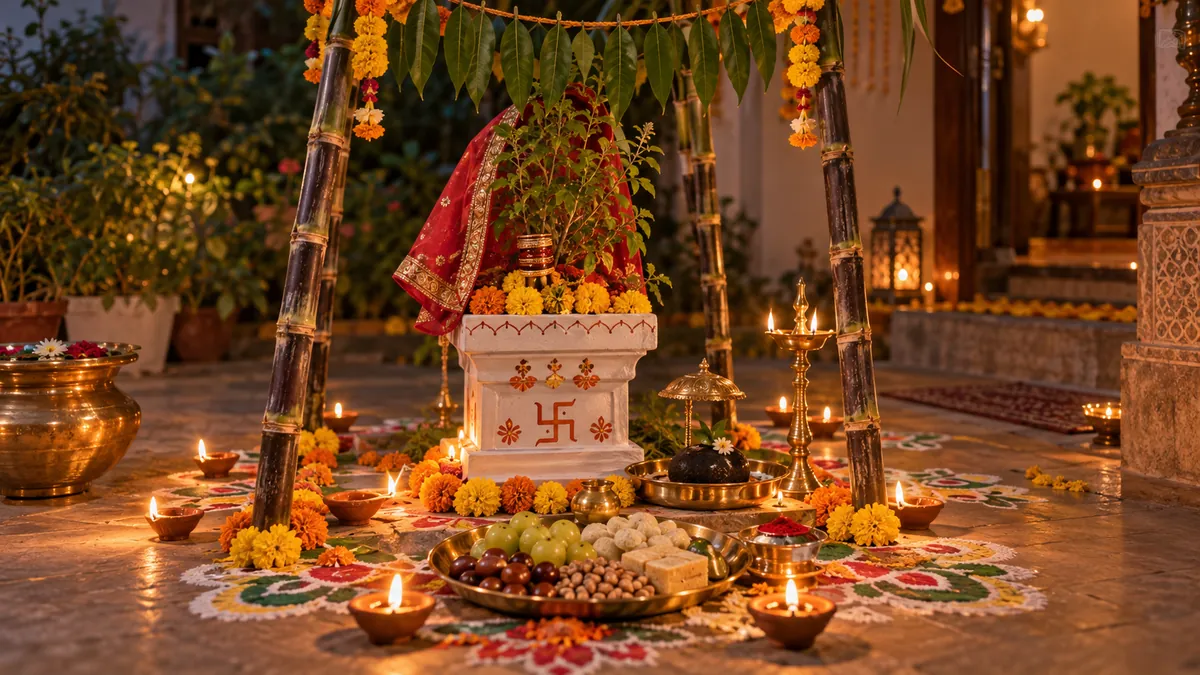
Many Gujarati homes do Tulsi Vivah at the tulsi kyaro, some on Agiyaras and others on Baras, as their family custom goes. The kyaro is cleaned and decorated with rangoli, and a small mandap of sugarcane is tied over it. Tulsi is dressed in a red chundadi with bangles and shringar, and Shaligram or a small idol of Lalji Maharaj is placed beside her. The family does the pujan with kanku, chokha and flowers, sings the lagna geet and offers ber, amla, sing and sweets. The pheras are done at godhuli time in the evening, and the prasad goes round to the neighbours afterwards.
Frequently Asked Questions
When is Tulsi Vivah in 2026?
Tulsi Vivah is celebrated on Friday, 20 November (Kartak Sud Agiyaras) and Saturday, 21 November (Kartak Sud Baras). Most mandals hold their main celebrations on Saturday.
Which is the most famous Tulsi Vivah in Bhavnagar?
Diamond Chowk Mitra Mandal has the best-known celebration. It has run for 70 years, and the hastmelap is at 8:30 pm on Saturday.
What is the best time for Tulsi Vivah at home?
Tulsi Vivah is done at godhuli time in the evening. On Saturday, 21 November, the godhuli muhurat is from 5:25 pm to 5:52 pm.
Can anyone attend these celebrations?
Yes. The mandal celebrations are open to everyone. You can join the varghodo, watch the hastmelap and stay for the cultural programs.
Dhiraj Patel is a seasoned writer for Bhavnagar.city, passionately exploring the city’s culture, history, and lifestyle. With a deep understanding of Bhavnagar’s heritage, he crafts engaging, well-researched content that resonates with locals and visitors alike. Dhiraj’s expertise and firsthand experiences ensure his articles are both informative and trustworthy.