
 Hospitals
 Companies
Bhavnagar Airport, located in the vibrant state of Gujarat, India, serves as a crucial gateway to the historic city of Bhavnagar. This regional airport, though smaller than major international hubs, is packed with charm and efficiency, offering visitors a seamless entry to the area’s rich cultural heritage and natural beauty.
Whether you’re planning a trip for business or leisure, understanding the ins and outs of Bhavnagar Airport can greatly enhance your travel experience.
Introduction to Bhavnagar Airport
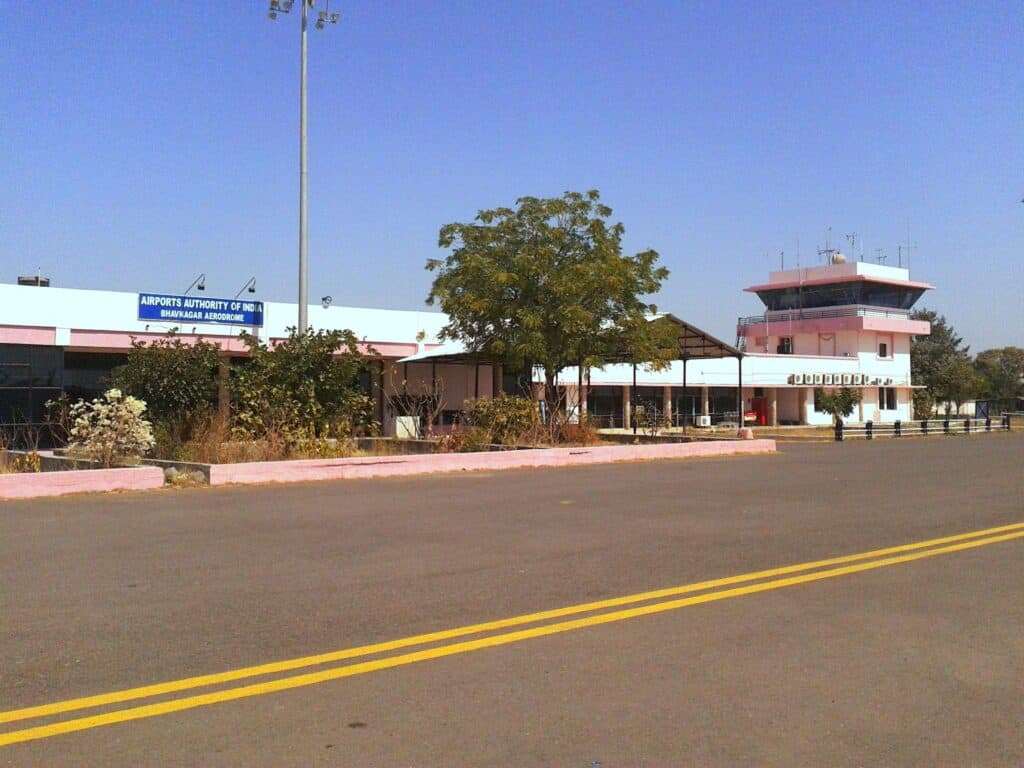
Located just a few kilometres from the heart of the city, Bhavnagar Airport serves as the primary air gateway for the region of Bhavnagar in Gujarat. Officially designated as IATA code BHU and ICAO code VABV, it is a domestic airport operated by the Airports Authority of India (AAI).
While modest compared to major metropolitan airports, Bhavnagar Airport plays an important role in regional connectivity—both for passengers and for the economic development of the Bhavnagar region. This article takes a detailed, fact‑checked look at the airport’s history, infrastructure, operations, challenges and future prospects.
Location & Significance
Bhavnagar Airport is situated at Shubhashnagar, around 4 km south‑east of Bhavnagar city centre. With an elevation of approximately 13 m (43 ft) above sea level, it covers an area of around 295 acres.
Given its proximity to the city and to the harbor region, the airport holds significance for both business and tourism travelers, and is convenient for passengers wanting minimal transfer time between city and runway.
Flight Information and Booking Tips
- Checking Flights: To plan your visit, it’s crucial to stay updated with the latest flight schedules. Flights to and from Bhavnagar Airport can be checked online through various airline websites or travel booking platforms. Always ensure to verify the flight status a few hours before departure, as schedules can sometimes change last minute.
- Booking Your Flight: When booking from Bhavnagar airport flights, consider doing so in advance to avail of better rates. Mid-week flights often offer more savings compared to weekend travel. Keep an eye out for offers and discounts, especially during festive seasons, which are common in India.
Airlines and Destinations

Flights and Routes
The airport’s scheduled route network is limited. Some sources note that only a small number of direct routes are operational, with perhaps just one or a few airlines serving. Popular routes include Bhavnagar → Mumbai and Bhavnagar → Pune.
Since the airport is relatively small, the frequency of flights is lower than major hubs, and passengers should verify schedule availability when planning travel.
Traffic Statistics
For the fiscal year April 2024 – March 2025, Bhavnagar Airport handled approximately 74,503 passengers (an increase of 1.4 %).
In the same period, aircraft movements numbered around 1,995 (an increase of 0.3 %).
Earlier‑reported capacity estimates suggested that based on apron and terminal size, the airport could handle up to 700,000 to 1,000,000 passengers (7–10 lakh) in its design capacity.
This indicates that current usage is well below theoretical maximum capacity, suggesting room for growth.
Infrastructure & Facilities
Runway, Apron and Terminal
- The single runway at Bhavnagar is numbered 07/25, with a length of 1,920 m (6,300 ft) and an asphalt surface.
- The apron size is listed as approximately 350 ft × 250 ft, with capacity for two Boeing 737 type aircraft at a time.
- The terminal building covers around 1,617 m² with a capacity for handling 110 passengers at a time (according to earlier data) and includes three check‑in counters and a VIP lounge.
- The peak hour handling capacity (both arrival + departure) is around 100 passengers.
- The airport is also equipped with an ILS (Instrument Landing System) approach for runway 25.
Accessibility & Transport Links
Given its short distance from Bhavnagar city centre (around 4 km), the airport is easily accessible by taxi or private car.
Passengers should allow additional time for check‑in, security and boarding since infrastructure is more compact and schedules less frequent than large airports.
Parking and drop‑off facilities are available, although users should verify space and rates in advance.
If you are travelling from further afield or linking via rail/bus, it’s wise to account for local traffic and potential delays.
Practical Tips for Travellers
- Check flight schedules in advance: Because services are fewer, changes or cancellations may have bigger impact than at larger hubs.
- Arrive early: Even though the airport is small, aim for 1.5–2 hours ahead for domestic flights to account for check‑in, security and potential busier periods.
- Transportation: Since it is close to the city, plan for a 10–15 minute ride from Bhavnagar city centre under normal conditions; adjust for peak traffic.
- Baggage and amenities: Confirm rules for carry‑on and checked baggage; amenities may be basic so bring any essentials you might need.
- Ground transport options: Taxis and car‑hire are readily available; if self‑driving, check parking availability and fees ahead.
- Weather & reliability: Although the airport is equipped with ILS for runway 25, weather conditions can impact operations—stay updated via your airline.
The Nearest Airport to Bhavnagar
Bhavnagar itself is a city teeming with history and culture. If you have some time before your flight or are looking for places to visit nearby, consider exploring some of these attractions:
- Gaurishankar Lake: A beautiful lake surrounded by a well-maintained park, perfect for a relaxing stroll or a quick picnic. It’s just a short drive from the airport.
- Takhteshwar Temple: Located on a hill, this temple offers panoramic views of the city and is a peaceful spot for reflection or prayer.
- Barton Library and Museum: For those interested in history and architecture, the Barton Library is a must-visit. The building is an architectural marvel, and the museum houses artifacts that trace the rich history of Bhavnagar.
Conclusion
Bhavnagar Airport stands at an interesting junction. On one hand, its infrastructure is already in place to handle significantly more traffic than currently seen. On the other, unlocking this potential will require coordinated efforts—airlines deciding to schedule more routes, regional authorities promoting utilisation, and passengers recognising the convenience of flying locally rather than via larger airports.
As Gujarat’s aviation ecosystem expands, smaller airports like Bhavnagar may play a more prominent role in connecting secondary cities, supporting business growth and providing easier transit options for local residents. The growth of port‑based industry in the Bhavnagar region, tourism initiatives and governmental schemes aimed at boosting regional connectivity all point to a favorable environment for growth.
If you’re planning travel via Bhavnagar, the key takeaway is: it’s a convenient, easy‑to‑use airport—just be sure to plan ahead given its smaller scale and slightly limited connectivity. For the region generally, there’s a significant runway ahead for growth.
FAQs
1. What is the IATA and ICAO code for Bhavnagar Airport?
The IATA code is BHU and the ICAO code is VABV.
2. How far is the airport from Bhavnagar city centre?
The airport is located roughly 4 km south‑east from Bhavnagar’s city centre.
3. What destinations and airlines operate from the airport?
The airport is a domestic‑only facility. It connects Bhavnagar with other cities in India, though the network is limited.
4. What are the runway and terminal details?
- The runway is numbered 07/25, with a length of about 1,920 m (≈ 6,300 ft).
- The terminal building is a single domestic terminal with capacity to handle around 100–110 passengers at a time.
5. What facilities are available at the airport?
Facilities include basic passenger amenities: check‑in counters, a VIP lounge, parking, taxi/auto services, wheelchair assistance, etc.
6. Are there international flights from Bhavnagar Airport?
No. The airport currently handles only domestic flights.
7. How early should I arrive for my flight?
As it’s a domestic airport and smaller in scale, arriving at least 1.5–2 hours before departure is advisable to allow check‑in, security, and boarding.
8. What transport options are available from the airport to the city?
Taxis and private car services are available. The short distance (≈ 4 km) means a ride of around 10‑15 minutes under normal traffic conditions.
9. Is parking available at the airport?
Yes, the airport provides parking and vehicle drop‑off areas. Check locally for any charges or space availability, especially during busy periods.
10. Does the airport have Instrument Landing System (ILS) capability?
Yes, the runway 25 direction is equipped with ILS to assist landings in lower visibility.

Dhiraj Patel is a seasoned writer for Bhavnagar.city, passionately exploring the city’s culture, history, and lifestyle. With a deep understanding of Bhavnagar’s heritage, he crafts engaging, well-researched content that resonates with locals and visitors alike. Dhiraj’s expertise and firsthand experiences ensure his articles are both informative and trustworthy.